
On this page
In high-risk industries such as construction, manufacturing, mining, and oil and gas, workplace safety is not just a regulatory requirement, it is a critical business priority. Organizations invest heavily in safety programs to reduce incidents, improve compliance, and protect their workforce. However, traditional training methods often struggle to prepare employees for real-world challenges.
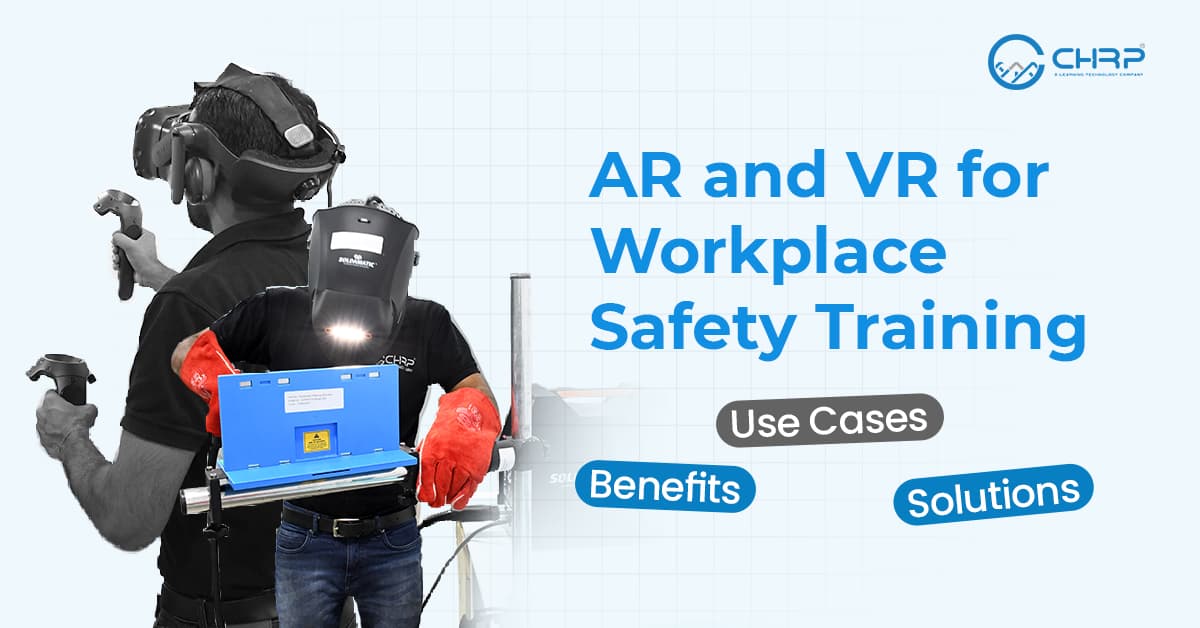
This is where AR and VR for workplace safety training are transforming how organizations approach workforce development. Alongside these technologies, Mixed Reality (MR) is emerging as a powerful addition, bridging the gap between digital simulation and real-world interaction. Together, these immersive technologies are enabling organizations to move beyond theoretical training and deliver practical, experience-driven learning.
The Challenge with Traditional Workplace Safety Training
Most organizations still rely on classroom-based training, presentations, manuals, and occasional demonstrations. While these methods help build foundational knowledge, they often fail to create real preparedness. Common limitations include:- Lack of real-world simulation of hazards
- Limited hands-on practice due to safety risks
- Low engagement and retention levels
- Inability to train employees for emergency scenarios
What Is AR, VR, and MR Workplace Safety Training?
Modern workplace safety training solutions are increasingly powered by three immersive technologies:Virtual Reality (VR)
VR places employees inside a fully simulated environment where they can interact with hazards, machinery, and emergency situations in a completely controlled setting.Augmented Reality (AR)
AR overlays digital instructions, warnings, and guidance onto real-world environments, helping employees perform tasks safely in real time.Mixed Reality (MR)
Mixed Reality combines elements of both AR and VR. It allows digital objects to interact with the real environment, enabling employees to engage with both physical equipment and virtual scenarios simultaneously. For example, a technician using MR can:- See a real machine in front of them
- Interact with virtual components layered onto it
- Practice procedures with real-time guidance and feedback
Key Benefits of AR, VR, and MR for Workplace Safety Training
- Risk-Free Yet Realistic Learning
- Higher Engagement and Retention
- Contextual Learning with MR
- Faster Skill Development
- Standardized and Scalable Training
- Measurable Performance Outcomes
Real-World Use Cases Across High-Risk Industries
Construction
Workers can simulate working at heights and equipment handling in VR, while AR and MR provide on-site guidance during actual tasks.Manufacturing
Technicians can practice machine operations in VR and use MR to interact with real equipment enhanced by virtual instructions.Mining
Employees can experience underground hazards through VR simulations and use AR tools for real-time safety checks.Oil and Gas
Teams can train for emergency scenarios in VR and use MR-assisted workflows for maintenance and operational safety. These applications show how AR, VR, and MR workplace safety training solutions are redefining how safety is learned and applied.Why Organizations Are Investing in Immersive Safety Training
The adoption of AR VR MR workplace safety training solutions is driven by clear business needs:- Reducing workplace accidents and operational risks
- Improving compliance and audit readiness
- Enhancing workforce productivity and decision-making
- Delivering scalable training across large teams
Choosing the Right Immersive Training Partner
Successful implementation requires more than technology. Organizations need:- Industry-specific expertise
- Strong instructional design capabilities
- Realistic and scenario-based simulation design
- Scalable and adaptable solutions
How CHRP-INDIA Enables AR, VR, and MR Safety Training
CHRP-INDIA delivers advanced AR VR MR workplace safety training solutions tailored to high-risk industries. Their approach focuses on:- Scenario-driven simulations that reflect real operational challenges
- Mixed Reality-enabled training for real-world task guidance
- Performance-focused learning design that drives behaviour change
- Scalable deployment across multiple locations and teams
The Future of Workplace Safety Training
Workplace training is evolving toward immersive and intelligent learning environments. Organizations are moving:- From passive learning to active simulation
- From theoretical instruction to real-world application
- From isolated training sessions to continuous, on-the-job learning