On this page
The oil and gas industry operates in some of the most hazardous, asset-intensive, and regulation-driven environments in the world. From offshore platforms to refineries and pipeline networks, operational precision and workforce competency directly impact safety, uptime, and profitability.
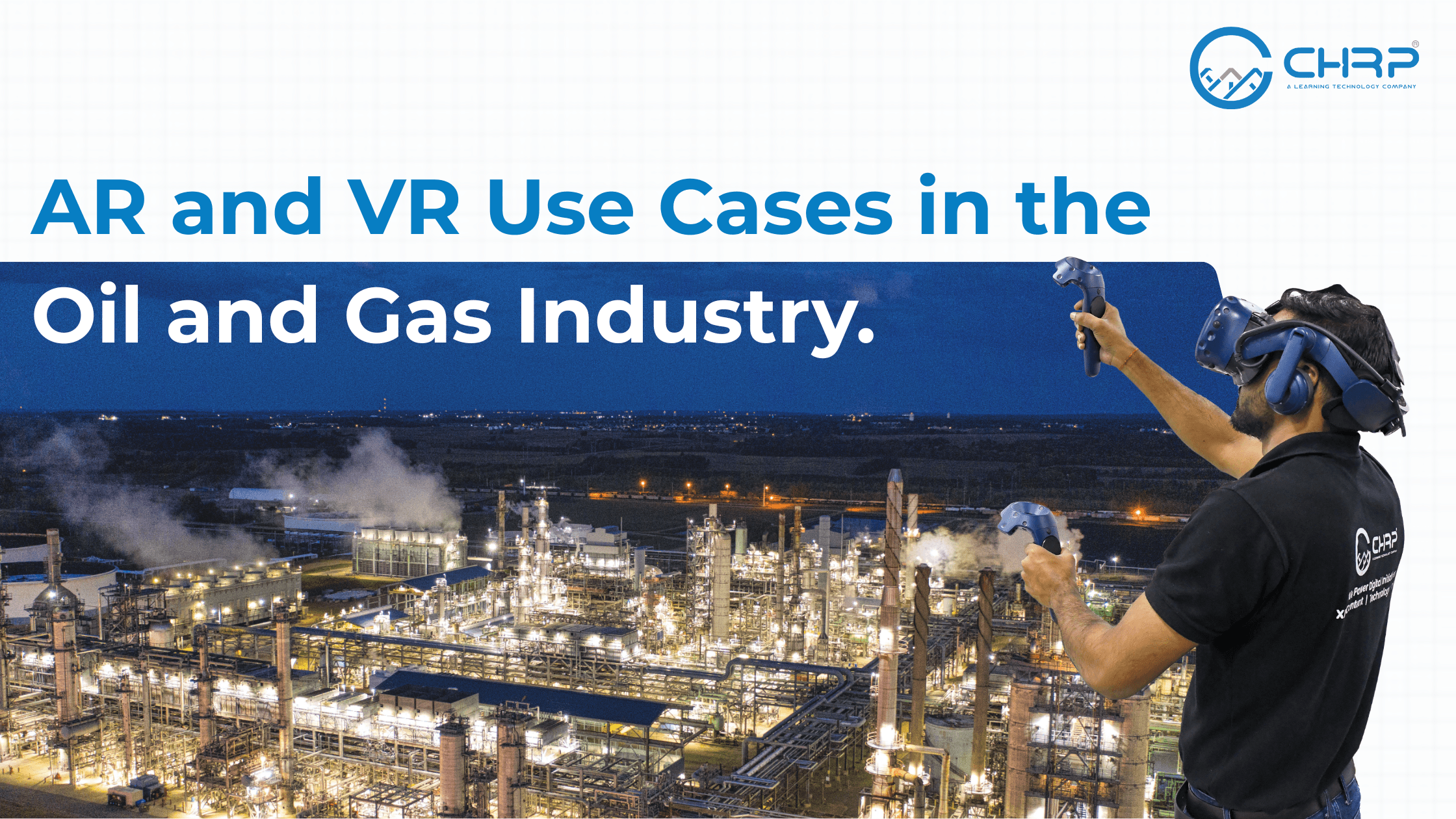
This is where AR and VR use cases in the oil and gas industry are redefining training, maintenance, inspection, and risk management.
Augmented Reality (AR), Virtual Reality (VR), and Extended Reality (XR) technologies are no longer experimental. They are becoming core components of digital transformation strategies across upstream, midstream, and downstream operations.
This article explores how AR and VR are transforming oil and gas operations - and how immersive learning solutions from CHRP-INDIA are helping organizations improve safety performance and operational efficiency.
Immersive training in oil and gas allows employees to practice procedures in realistic, simulated environments - without exposing them to actual danger.
Top AR and VR Use Cases in the Oil and Gas Industry
-
VR Safety Training for High-Risk Environments
- Fire and explosion scenarios
- Gas leak identification
- Confined space entry procedures
- Emergency evacuation drills
- Hazard identification simulations
- Reduced incident rates
- Faster onboarding
- Better compliance adherence
-
Virtual Reality for Offshore Oil Rig Training
- Equipment handling practice
- Drilling process simulations
- Emergency response training
- Lockout-tagout procedures
- Heavy machinery operation familiarization
-
AR-Based Maintenance and Remote Assistance
- View step-by-step digital overlays on equipment
- Access real-time data while performing repairs
- Connect with remote experts for troubleshooting
- Reduce human error in complex maintenance tasks
- Refineries
- Pipeline systems
- LNG terminals
- Pumping stations
-
AR Solutions for Pipeline Inspection and Asset Monitoring
- Visualize underground pipeline layouts
- Overlay digital schematics on physical infrastructure
- Identify potential corrosion or structural weaknesses
- Improve inspection accuracy
-
Immersive Learning for Workforce Upskilling
- Simulating real equipment operations
- Recreating rare but critical emergency events
- Enabling repeatable practice sessions
- Tracking performance analytics
How AR and VR Improve Safety in Oil and Gas
The biggest measurable benefit of AR and VR adoption is risk reduction.Key Safety Improvements:
- Enhanced hazard recognition
- Improved emergency preparedness
- Reduced human error
- Higher compliance alignment
- Faster reaction time in crisis scenarios
Business Benefits of AR and VR in Oil and Gas
Beyond safety, immersive technology delivers tangible ROI.-
Reduced Downtime
-
Lower Training Costs
-
Faster Onboarding
-
Standardized Global Training
-
Digital Transformation Enablement
Why Oil and Gas Companies Are Partnering with CHRP-INDIA Pvt. Ltd.
CHRP-INDIA Pvt. Ltd. develops immersive learning and simulation-based training solutions tailored for industrial environments. For oil and gas companies, this means:- Custom VR safety simulations
- Equipment-specific operational training modules
- AR-based maintenance workflow solutions
- Scenario-based emergency response training
- Performance analytics-driven learning systems
The Future of AR and VR in the Oil and Gas Industry
The adoption curve is accelerating. In the coming years, expect:- Wider deployment of AR smart helmets
- AI-integrated immersive simulations
- Digital twin integration with VR training
- Remote collaboration becoming standard practice
- Greater regulatory encouragement of immersive safety training