
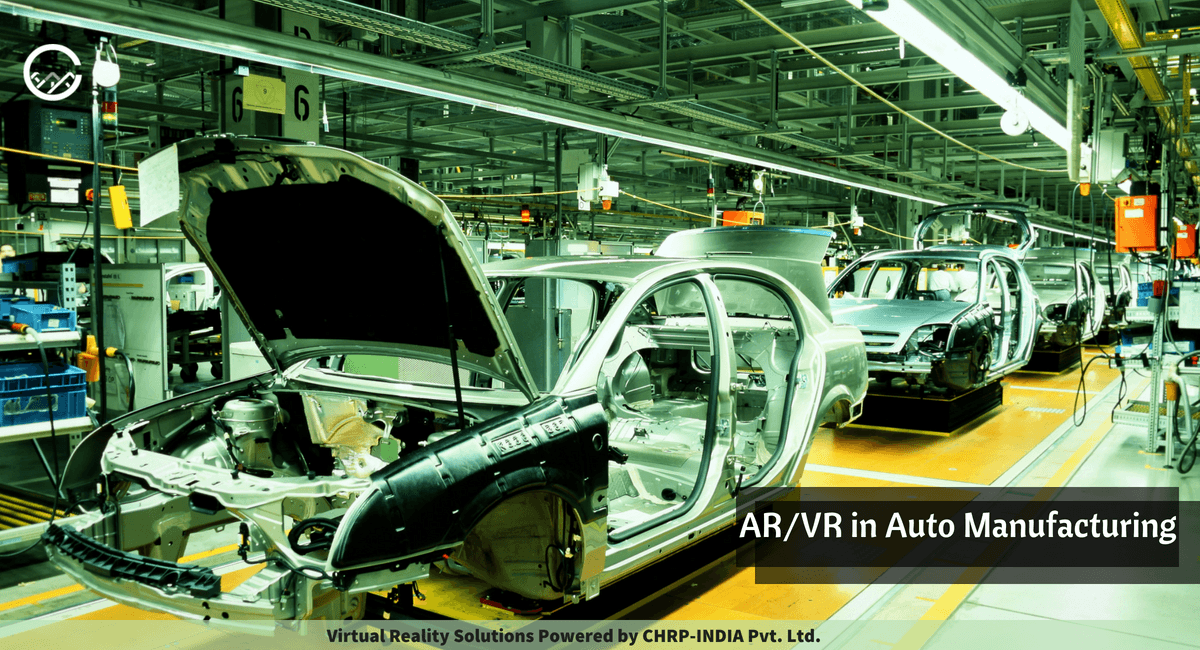
The massive proliferation of Virtual Reality (VR) & Augmented Reality (AR) had a far-reaching impact on multiple industries. It was only a matter of time, it also provided business impetus to the manufacturing sectors as well. PWC data proves that more than 1/3rd of the US manufacturers would embrace AR/VR by 2018. The following four areas on the factory floor observe the biggest change via AR/VR technology –
1 – Product development
2 – Worker training
3 – Automated maintenance (monitoring and diagnostics)
Interested to know how AR/VR has brought radical changes on the factory floor? Then check out this use case on application of AR/VR by Volkswagen – a global automobile manufacturer brand.
How Volkswagen Applies AR/VR for better outcomes?
1 – Mobile Augmented Reality
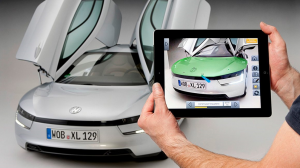
Service support for XL1 model gets a total makeover with the Mobile Augmented Reality Technical Assistance (MARTA tool). The XL1 is a state of art vehicle and this factor is extended to its service support function as well. All the service personnel will have to do is, point out the MARTA application on their tablet on car. This will overlay the car image and augment it with actual parts in 3D. It will detail out the tools to be used, assembly configurations, and test specifications needed to service a particular car.
Image source from engadget
2 – Spatial Reality
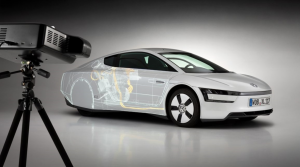
Traditionally, hardware models are used in the pre-production process as they provide better assessment of forms, curves, and geometries. Virtual models are scaled down to the display size and does not provide a precise estimation of the reality. With Spatial AR, the virtual data is displayed in actual size and proportions using a projector on an actual car model. If the designer could capture proper projector angle, ambient lighting, and geometry and material of the model, then accurate analysis of virtual data can be overlaid on the car model.
Image source from volkswagenag