
On this page
In industries like mining, construction, manufacturing, and heavy engineering, the performance of heavy equipment operators directly impacts safety, productivity, and operational efficiency.
However, many organizations today face a common challenge: operators are not fully prepared for real-world conditions.
Despite investing in training programs, gaps still exist. These gaps often lead to safety incidents, equipment damage, and inconsistent performance.
This is where simulation based training is changing the way industrial workforce training is delivered.
Understanding Skill Gaps in Heavy Equipment Operations
Operating heavy machinery is not just about handling controls. It requires judgment, awareness, and the ability to respond quickly in high-risk situations. Some of the most common skill gaps include: Limited Real-World Exposure Operators are rarely exposed to critical situations such as equipment failure, unstable terrain, or emergency scenarios during training. Inconsistent Training Quality Training methods often vary across locations or trainers, leading to uneven skill levels within teams. Low Confidence in High-Risk Situations Even trained operators may hesitate or react incorrectly when faced with unexpected conditions. Safety Awareness Gaps A lack of practical safety experience increases the risk of workplace incidents. Difficulty Adapting to Advanced Equipment Modern machinery comes with digital systems and automation features that require a different level of understanding. These gaps highlight a clear need for more practical and experience-driven training approaches.Why Traditional Training Methods Are Not Enough
Most traditional training methods rely on classroom sessions or limited on-site exposure. While they help build basic knowledge, they often fall short when it comes to real-world application.- They do not simulate actual working conditions
- They offer limited opportunities for practice
- They cannot safely recreate hazardous situations
- They rely heavily on passive learning
What is Simulation-Based Training?
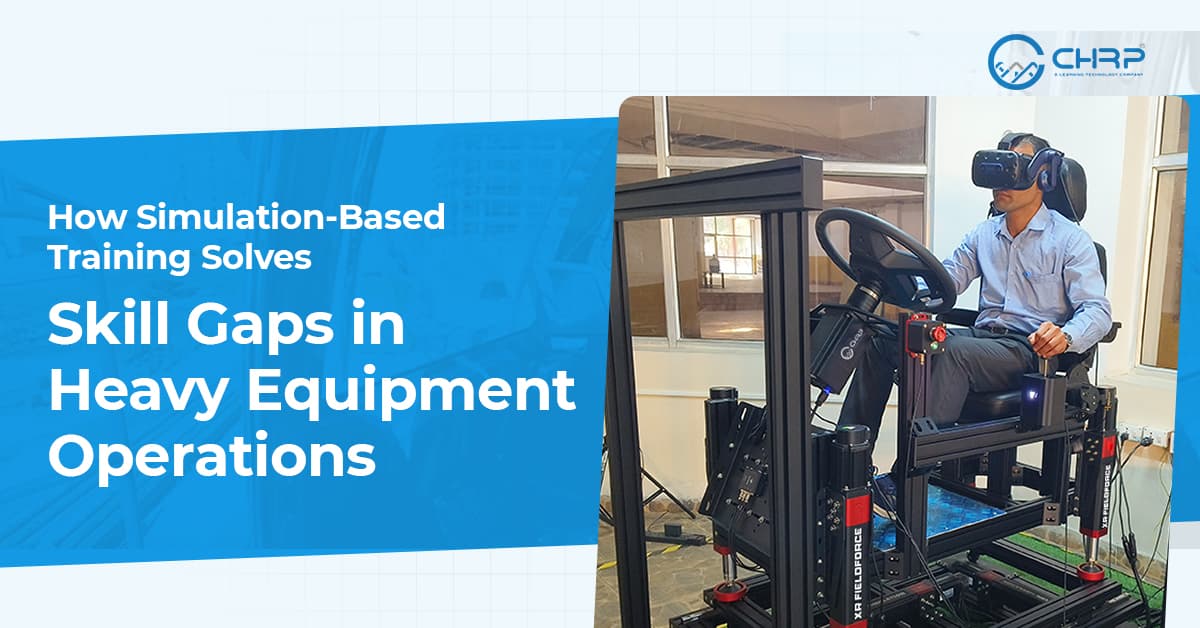
Simulation-based training uses immersive technologies such as Virtual Reality (VR), Augmented Reality (AR), and Extended Reality (XR) to replicate real operational environments. Instead of learning through theory, operators learn by doing. They can interact with equipment, experience real scenarios, and make decisions in a controlled and safe environment.How Simulation-Based Training Bridges the Skill Gap
1. Safe, Risk-Free Practice
Operators can train in hazardous scenarios without any real-world consequences. This allows them to make mistakes, learn from them, and build confidence before entering actual work environments. 2. Realistic Scenario-Based Learning Simulation recreates real challenges such as:- Equipment malfunction
- Sudden operational risks
- Environmental hazards
- Response times
- Errors and decision patterns
- Task completion efficiency
Why Industries Are Adopting Simulation-Based Training
Organizations are increasingly moving toward immersive training because it delivers clear business value. It helps:- Improve workforce readiness
- Strengthen safety practices
- Reduce operational risks
- Enhance overall productivity
What Sets CHRP-INDIA Apart?
Industry-Focused Approach The solutions are designed based on real operational challenges across mining, construction, and manufacturing sectors. Immersive Learning Expertise By leveraging VR, AR, and XR technologies, CHRP-INDIA creates training environments that closely mirror real-world conditions. Custom-Built Training Programs Each solution is developed to match the specific equipment, processes, and safety requirements of the organization. Scalable Deployment Training programs can be rolled out across multiple locations while maintaining consistency and quality. End-to-End Support From design to implementation, CHRP-INDIA ensures a smooth transition to modern training methods. Real-World Applications Simulation-based training can be applied across various industrial use cases:- Equipment operation and handling
- Safety and hazard awareness
- Emergency response training
- Maintenance procedures
- Site-specific operational training
- Faster onboarding of operators
- Improved safety performance
- Reduced equipment-related incidents
- More confident and capable workforce