Safety Training
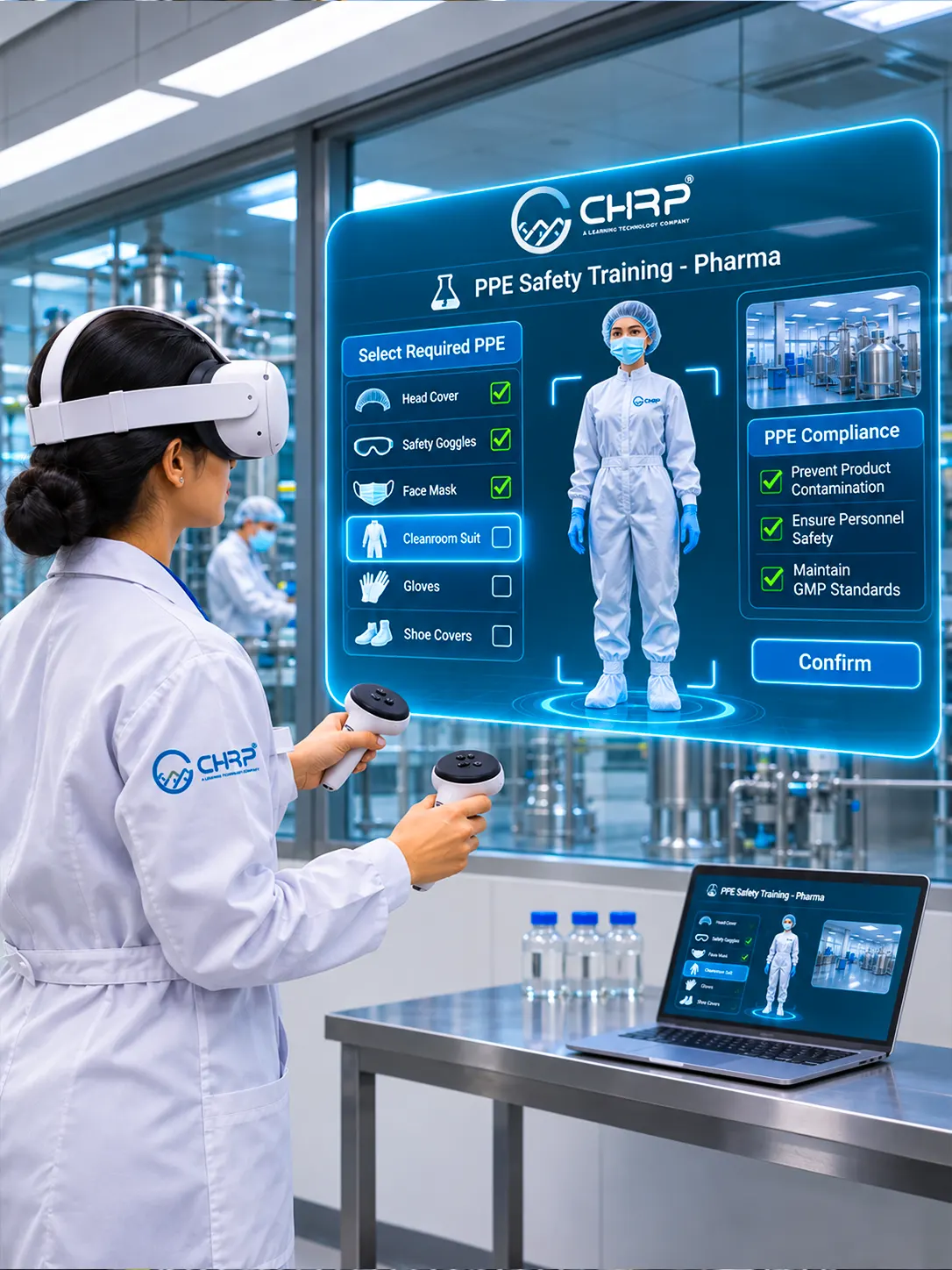
Practise safe behaviours, PPE use, and responses to workplace hazards.
Loading page content...

Explore local solutions and choose your preferred language.
Current selection
Europe / English (Global)
1 to 3 of 3 markets
All markets shownLoading page content...
Loading page content...
Virtual Reality Training

Virtual Reality Training
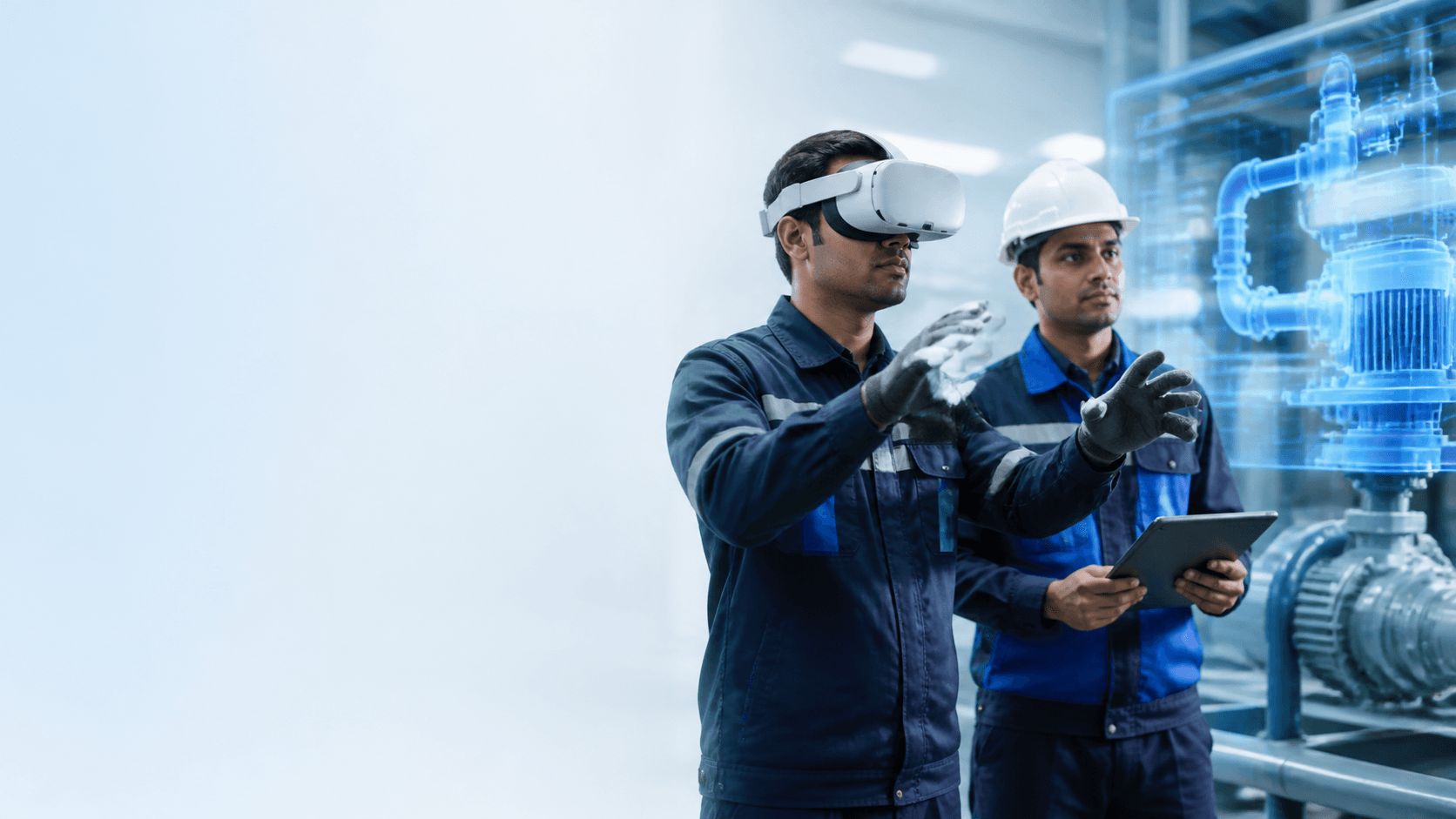
Build workforce confidence, safety, and operational readiness through immersive VR training designed around real environments, tasks, and risks.
Immersive Training
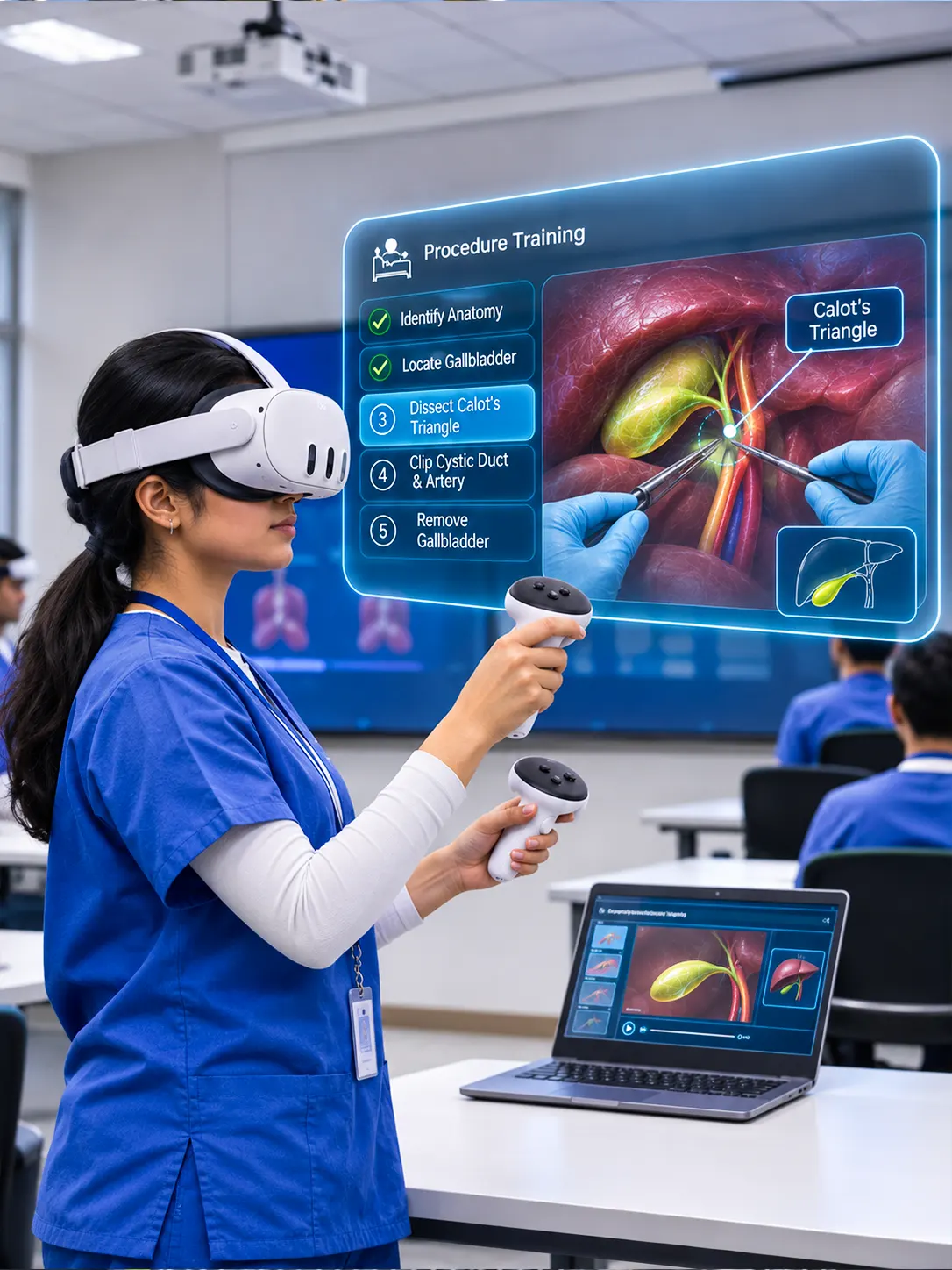
Practise procedures, equipment operation, hazard recognition, and emergency response in safe VR environments.
Immersive practice loop
Enter a realistic environment and recognise what matters.
Respond to tasks, hazards, and changing conditions.
Build familiarity and confidence through safe practice.
Each experience reflects your workplace, learner roles, and the performance required on the job.
Safe conditions. Real decisions. Repeatable practice.
Immersive Training
Practise procedures, equipment operation, hazard recognition, and emergency response in safe VR environments.
Each experience reflects your workplace, learner roles, and the performance required on the job.
Immersive practice loop
Enter a realistic environment and recognise what matters.
Respond to tasks, hazards, and changing conditions.
Build familiarity and confidence through safe practice.
Safe conditions. Real decisions. Repeatable practice.
Why Virtual Reality
Safety risks, complex equipment, field conditions, and operational pressure demand practical preparation. Instruction alone offers limited opportunities to practise.
Why it changes the experience
Virtual Reality enables active, repeatable practice and safe decisions in realistic scenarios, supporting safety, compliance, and workforce readiness.
Explore a realistic environment
Make a decision and see its consequence
Repeat until the task feels familiar
The experience can feel real. The learning environment stays controlled.
Discuss VR TrainingWhy Virtual Reality
Safety risks, complex equipment, field conditions, and operational pressure demand practical preparation. Instruction alone offers limited opportunities to practise.
Virtual Reality enables active, repeatable practice and safe decisions in realistic scenarios, supporting safety, compliance, and workforce readiness.
Why it changes the experience
The experience can feel real. The learning environment stays controlled.
Discuss Your VR Training NeedsVR Training Solutions
Every simulation is shaped around the learner, the task, the environment, and the level of practice required.
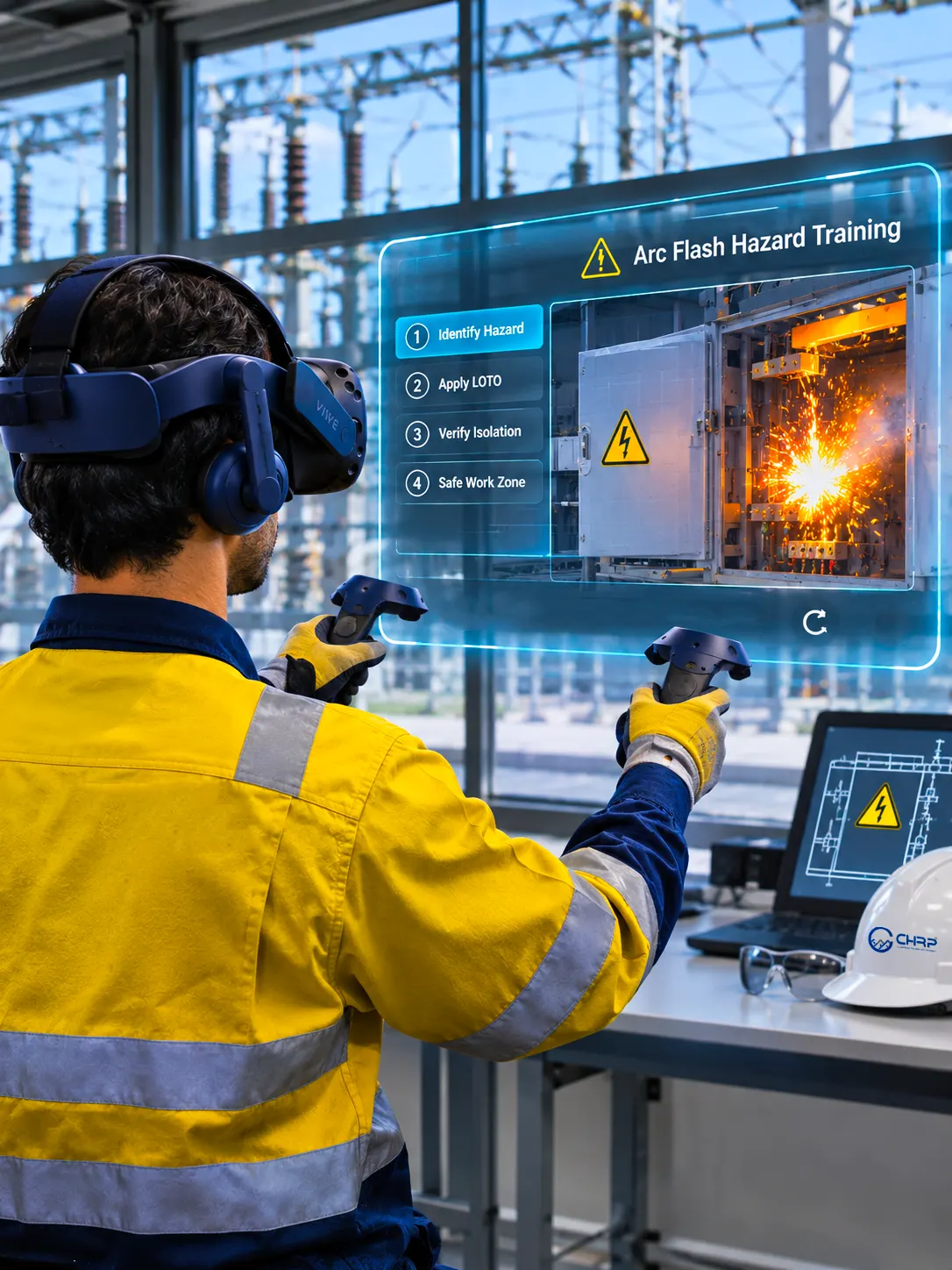
Practise safe behaviours, PPE use, and responses to workplace hazards.
Identify unsafe conditions and risks within realistic simulated environments.
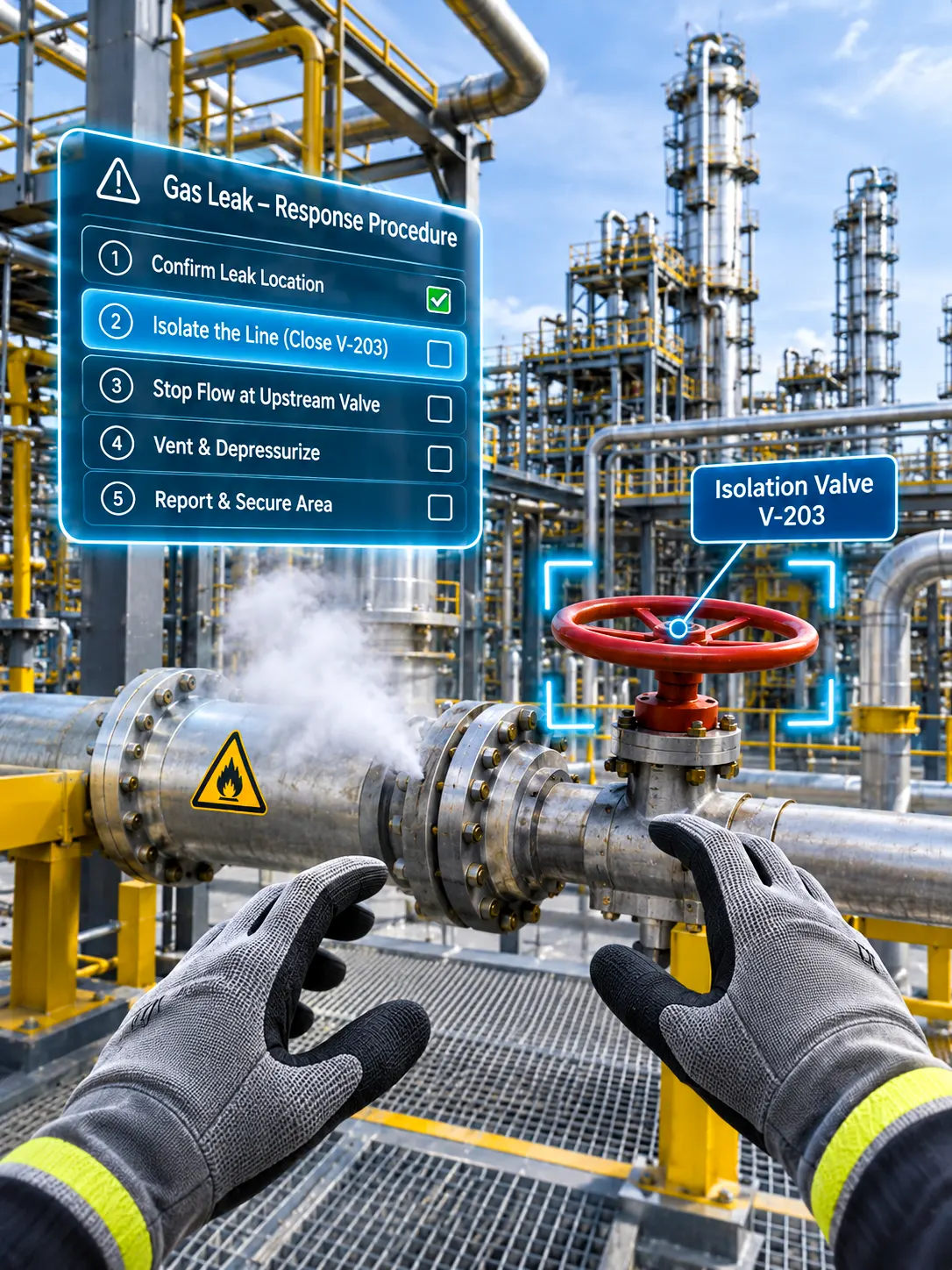
Prepare employees for fires, failures, evacuations, and other critical situations.
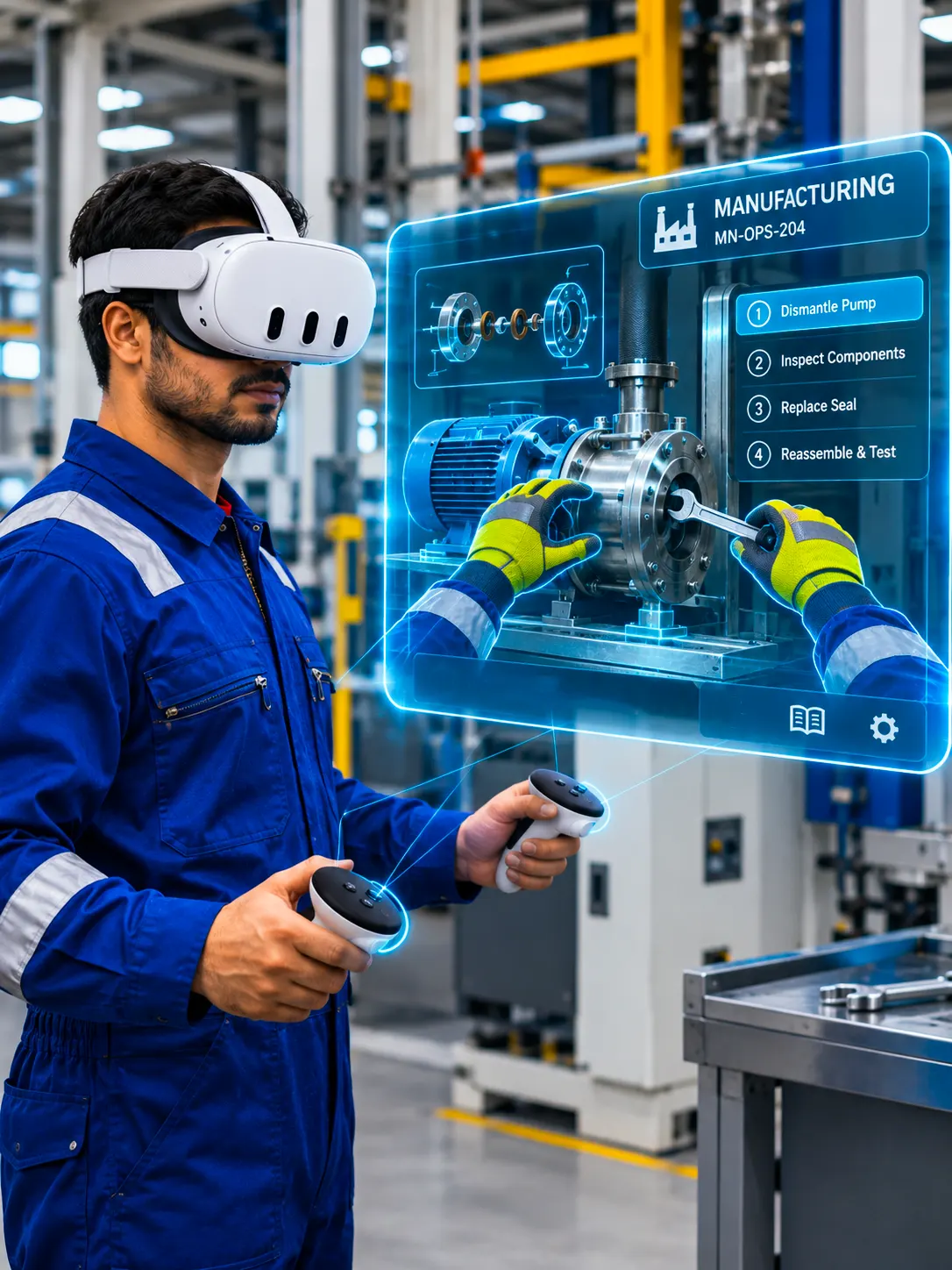
Build familiarity with machinery, controls, vehicles, and operational procedures.
Practise inspection, fault identification, and maintenance procedures step by step.
Familiarise employees with layouts, restricted areas, safety zones, and operational spaces.
Follow procedures, complete tasks, and understand the consequence of incorrect actions.
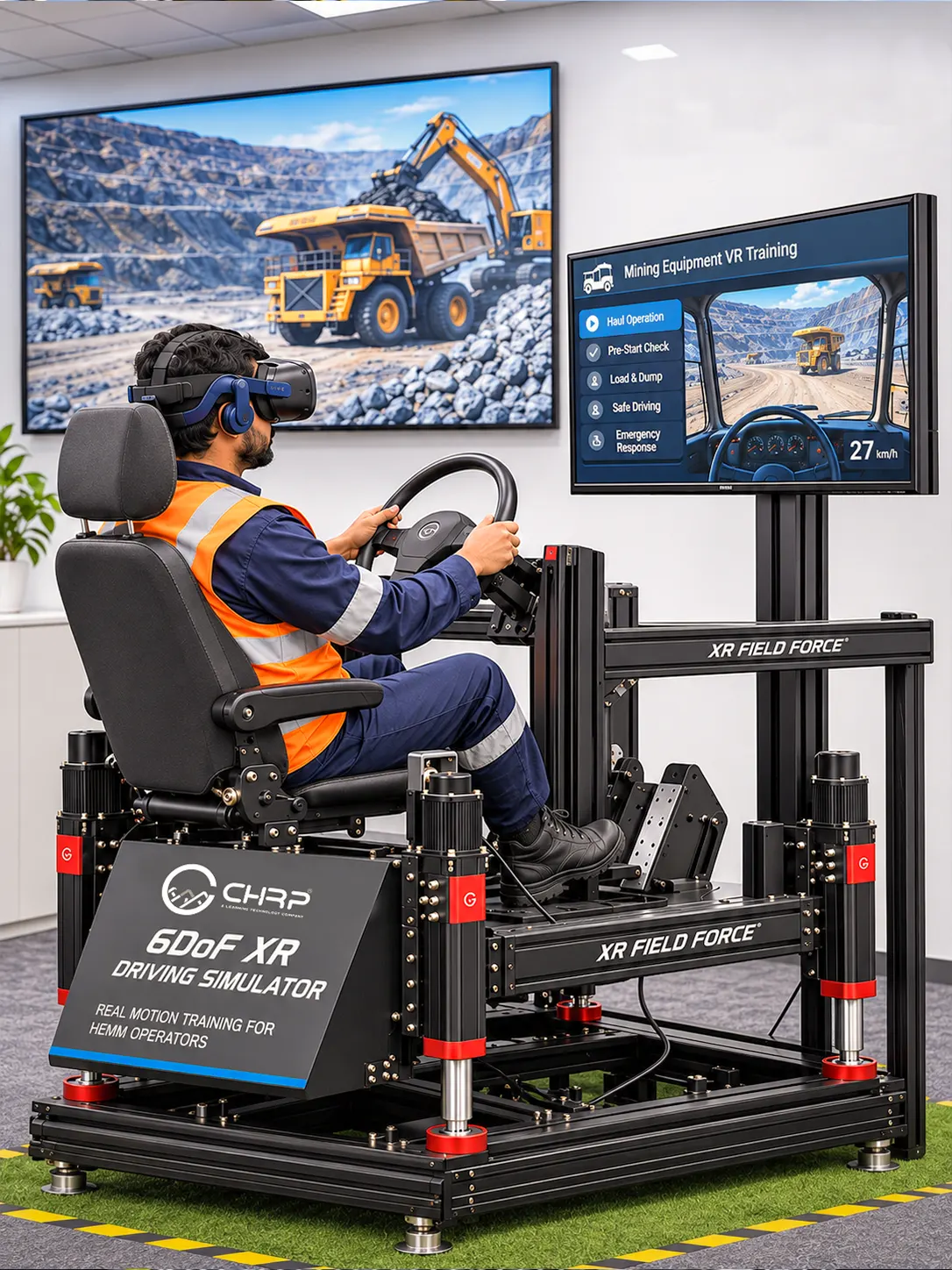
Develop situational awareness, vehicle control, and hazard response in simulated conditions.
Visualise equipment, systems, components, and processes through interactive 3D environments.
VR Training Solutions
Every simulation is shaped around the learner, the task, the environment, and the level of practice required.
Practise safe behaviours, PPE use, and responses to workplace hazards.
Our VR Development Approach
We study learner roles, tasks, equipment, risks, and expected performance before designing the simulation.
Start with your training requirement
Hover over or select a stage to see how we take your requirement forward.
Understand the training challenge, audience, environment, and expected outcomes.
Review SOPs, manuals, equipment references, site information, and SME inputs.
Define learning objectives, scenarios, interactions, decisions, and assessment logic.
Develop storyboards, scene flows, interaction maps, and user guidance.
Create the virtual environment, 3D assets, interactions, animations, and feedback systems.
Test accuracy, functionality, usability, comfort, and device performance.
Prepare the solution for headsets, simulation stations, XR labs, or enterprise training environments.
Our VR Development Approach
We study learner roles, tasks, equipment, risks, and expected performance before designing the simulation.
Start with your training requirement
Hover over or select a stage to see how we take your requirement forward.
Stage 01
Understand the training challenge, audience, environment, and expected outcomes.
Start Your VR Training ProjectIndustries We Support
What Enterprises Gain from VR Training
Employees can practise high-risk tasks without being exposed to real hazards.
Learners experience workplace environments, equipment, hazards, and situations that are difficult to recreate physically.
VR creates active participation, helping learners stay involved and focused during training.
Learners can repeat procedures, decisions, and actions until they build confidence.
Employees can see consequences, identify hazards, and practise safer choices in simulated scenarios.
Deliver consistent training experiences across locations, teams, shifts, and workforce groups.
Train employees without stopping equipment, blocking work areas, or recreating risky scenarios physically.
Why CHRP-EUROPE for VR

CHRP-EUROPE combines instructional design, simulation development, 3D production, and enterprise training expertise to create immersive solutions grounded in real performance requirements.
One enterprise-ready capability stack
Every simulation begins with a defined learning and performance objective.
Experience with safety, technical, equipment, and operational learning requirements.
Solutions designed around your environment, equipment, SOPs, and workforce roles.
From storyboarding and 3D production to interaction logic, testing, and deployment.
VR can be combined with eLearning, video, assessments, LMS platforms, and instructor-led learning.
Support for headsets, simulation stations, XR labs, and rollout planning.
Localised voice guidance, instructions, labels, subtitles, and feedback.
Learning expertise, immersive technology, and a practical enterprise rollout.
Talk to a VR ExpertWhy CHRP-EUROPE for VR
CHRP-EUROPE combines instructional design, simulation development, 3D production, and enterprise training expertise to create immersive solutions grounded in real performance requirements.
One enterprise-ready capability stack
Every simulation begins with a defined learning and performance objective.
Experience with safety, technical, equipment, and operational learning requirements.
Solutions designed around your environment, equipment, SOPs, and workforce roles.
From storyboarding and 3D production to interaction logic, testing, and deployment.
VR can be combined with eLearning, video, assessments, LMS platforms, and instructor-led learning.
Support for headsets, simulation stations, XR labs, and rollout planning.
Localised voice guidance, instructions, labels, subtitles, and feedback.
Learning expertise, immersive technology, and a practical enterprise rollout.
Talk to a VR ExpertInsights and Resources
Practical perspectives on how immersive learning can support workforce safety, readiness, and confident decision-making.
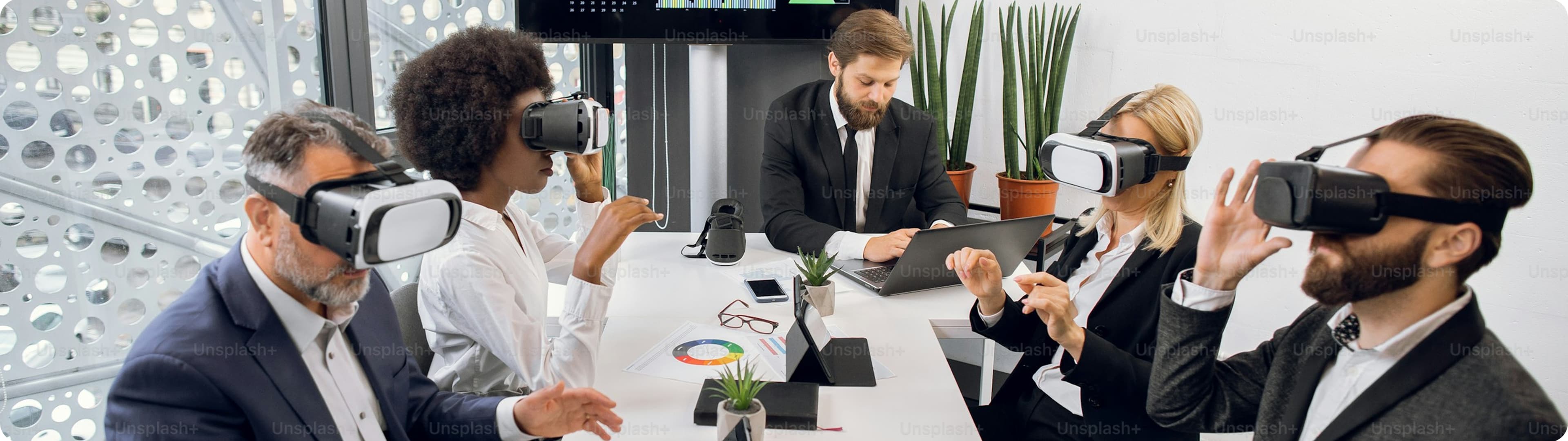
Case Study
See how immersive scenarios can strengthen hazard awareness and safety decision-making.
Discuss Your Requirement
Tell us what you are trying to improve and our solutions team will help shape the right service approach.
Fields marked * are required.
Frequently Asked Questions
VR training uses interactive 3D environments and immersive technology to help learners practise tasks, procedures, and decisions within simulated workplace scenarios.
We develop VR solutions for safety, hazard identification, emergency response, equipment operation, maintenance, site orientation, process training, driving simulation, and technical learning.
Yes. Simulations can be developed around your environment, equipment, SOPs, learner roles, risks, and required performance outcomes.
Yes. Solutions can include task tracking, scoring, decision points, errors, attempts, feedback, and performance indicators.
Not always. VR is often most effective as part of a blended learning approach alongside eLearning, instructor-led training, video, and practical assessment.
VR can support industries where safety, equipment, operational readiness, and practical skill development are important, including manufacturing, energy, oil and gas, mining, healthcare, pharmaceuticals, automotive, and defence.
Yes. CHRP-EUROPE can support headset planning, simulation stations, XR labs, training rooms, and deployment requirements.
Yes. Voice prompts, instructions, UI labels, subtitles, and feedback can be localised for different workforce groups.
Tracking and reporting integration can be supported depending on the platform, hardware, and deployment architecture.
Start with the training challenge. Share the learner role, environment, task, risks, SOPs, and expected outcomes, and we can define the most appropriate immersive training approach.
Let us turn real workplace risks, tasks, and performance needs into immersive practice that builds confidence before the work begins.